5. 2D equilibrium charge arrangement
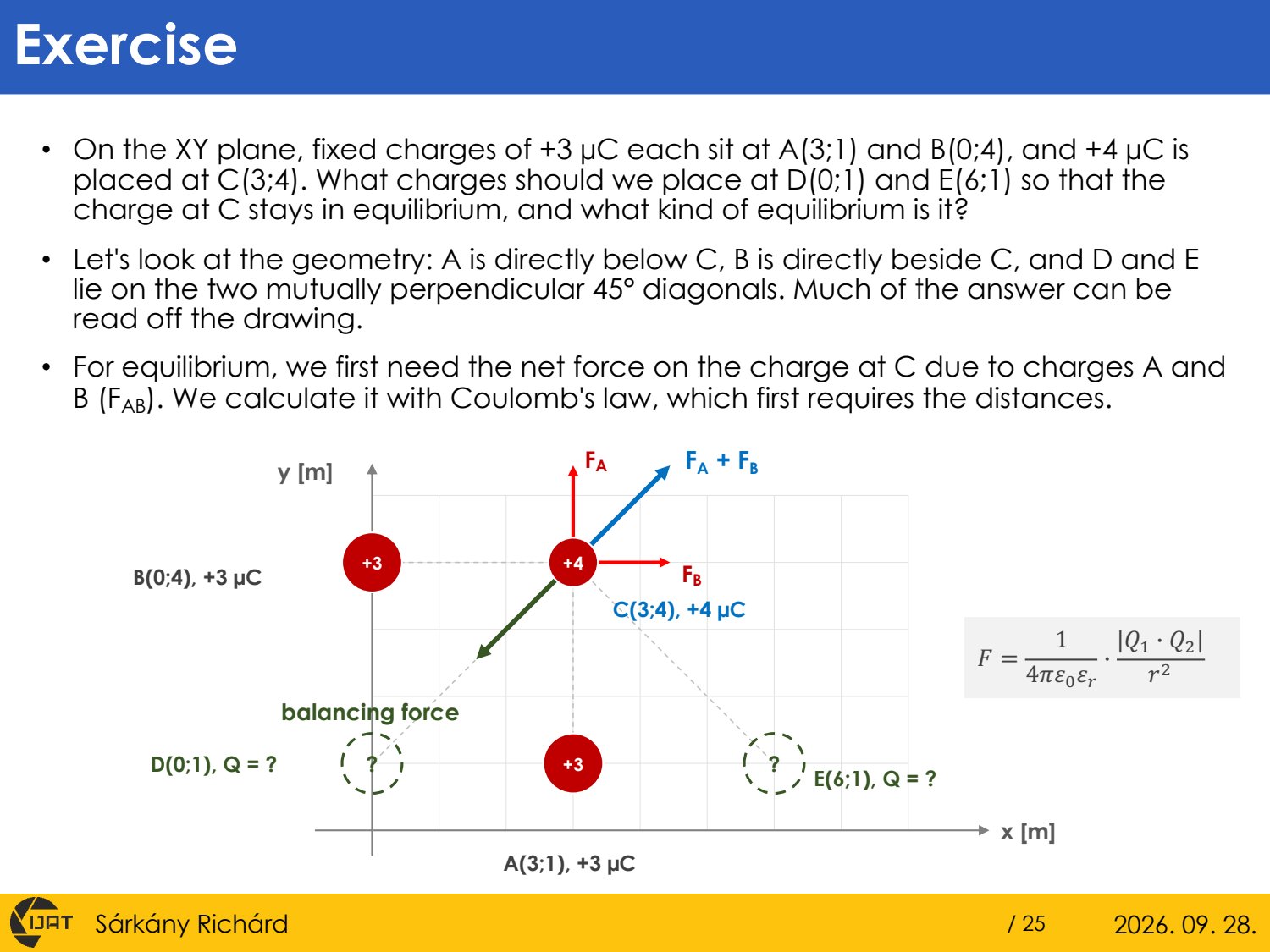
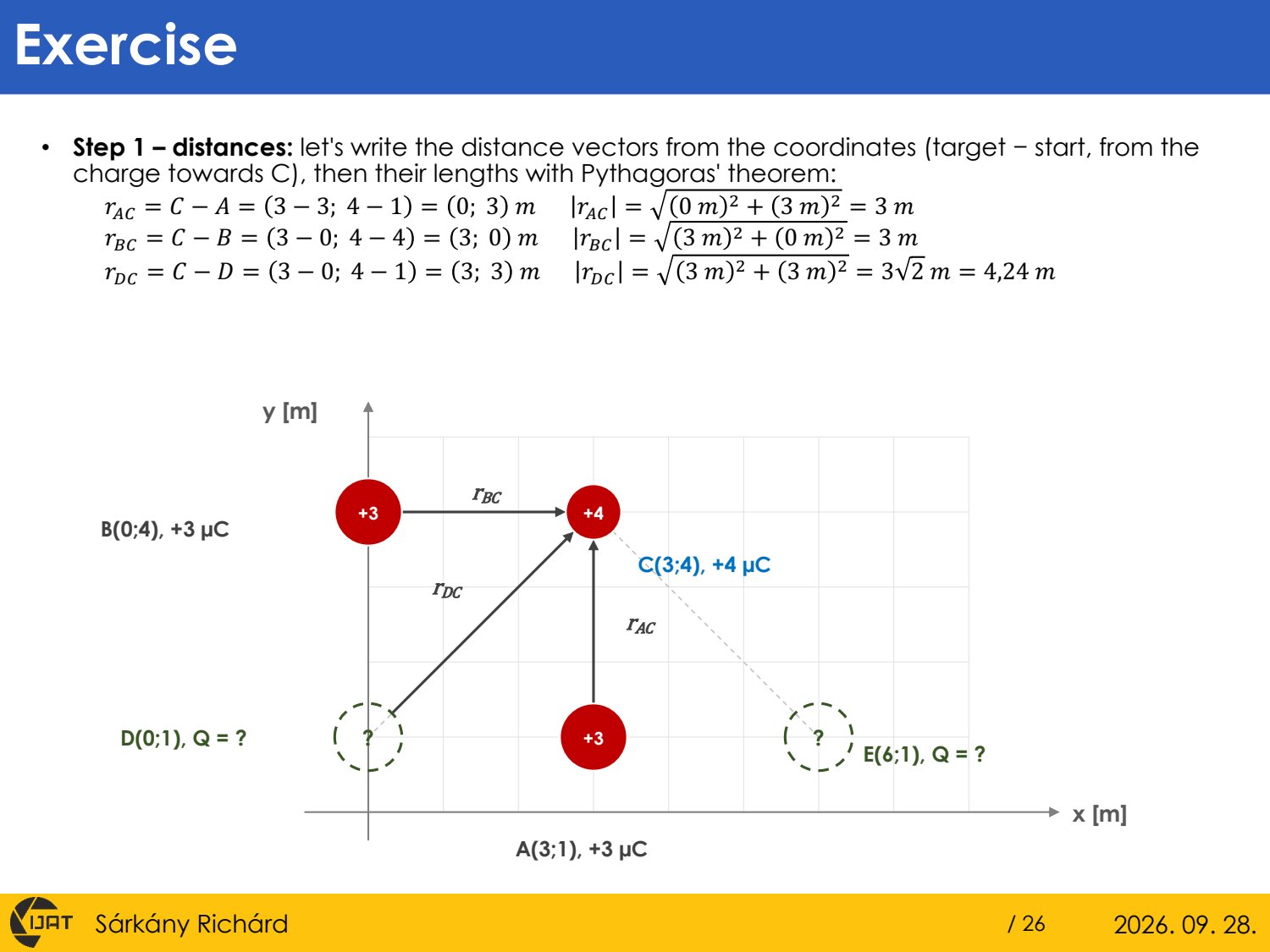
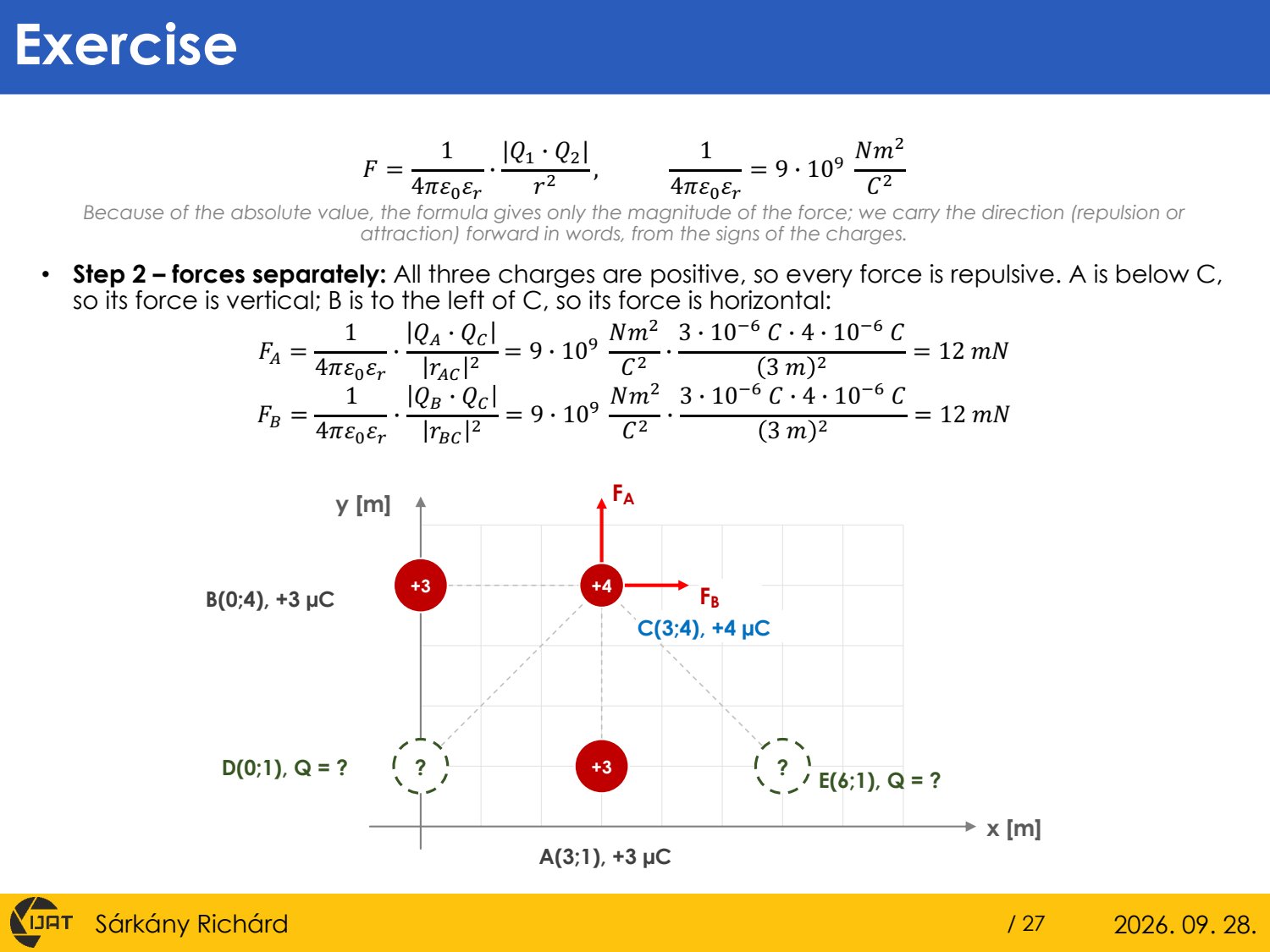
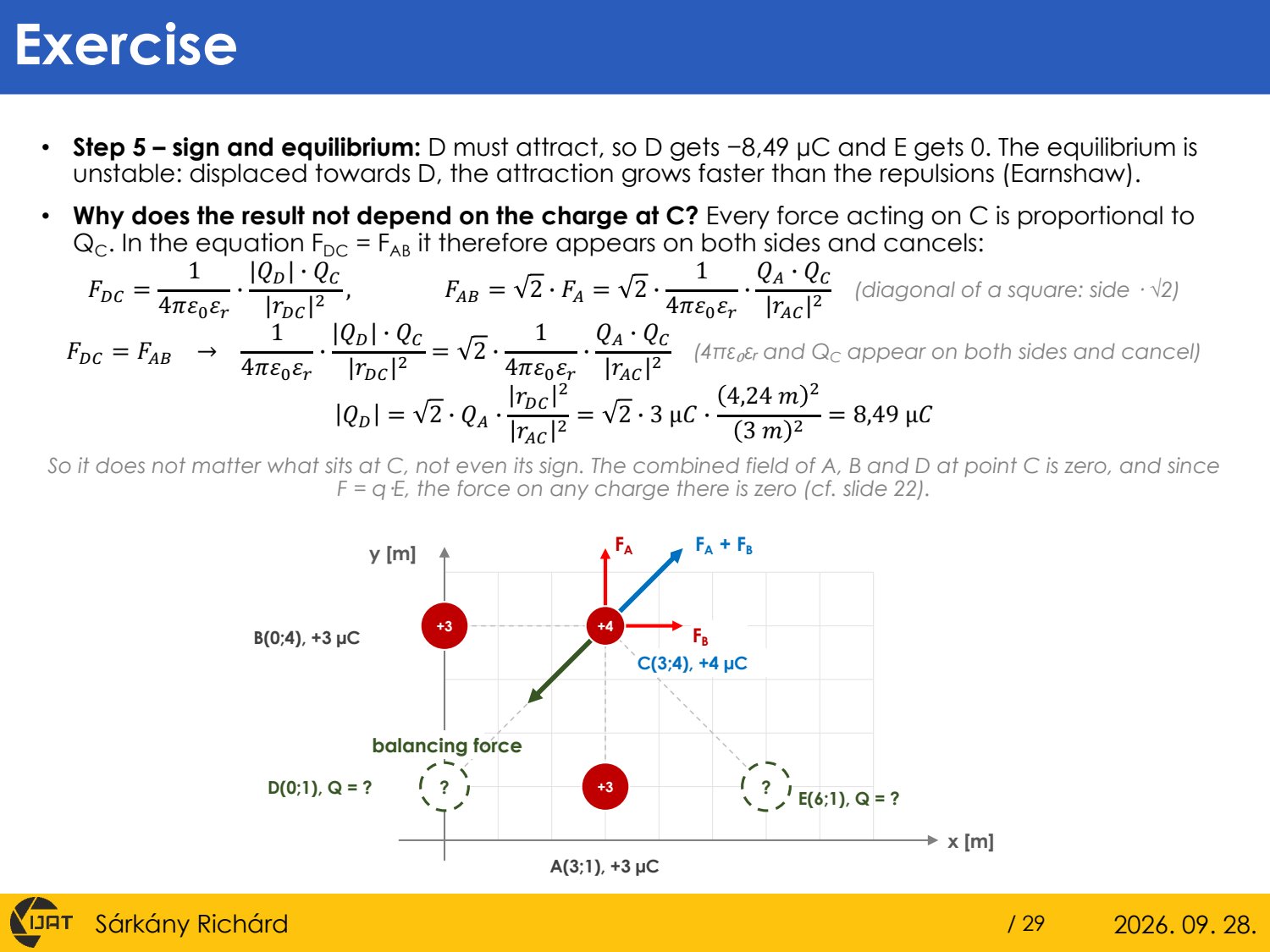
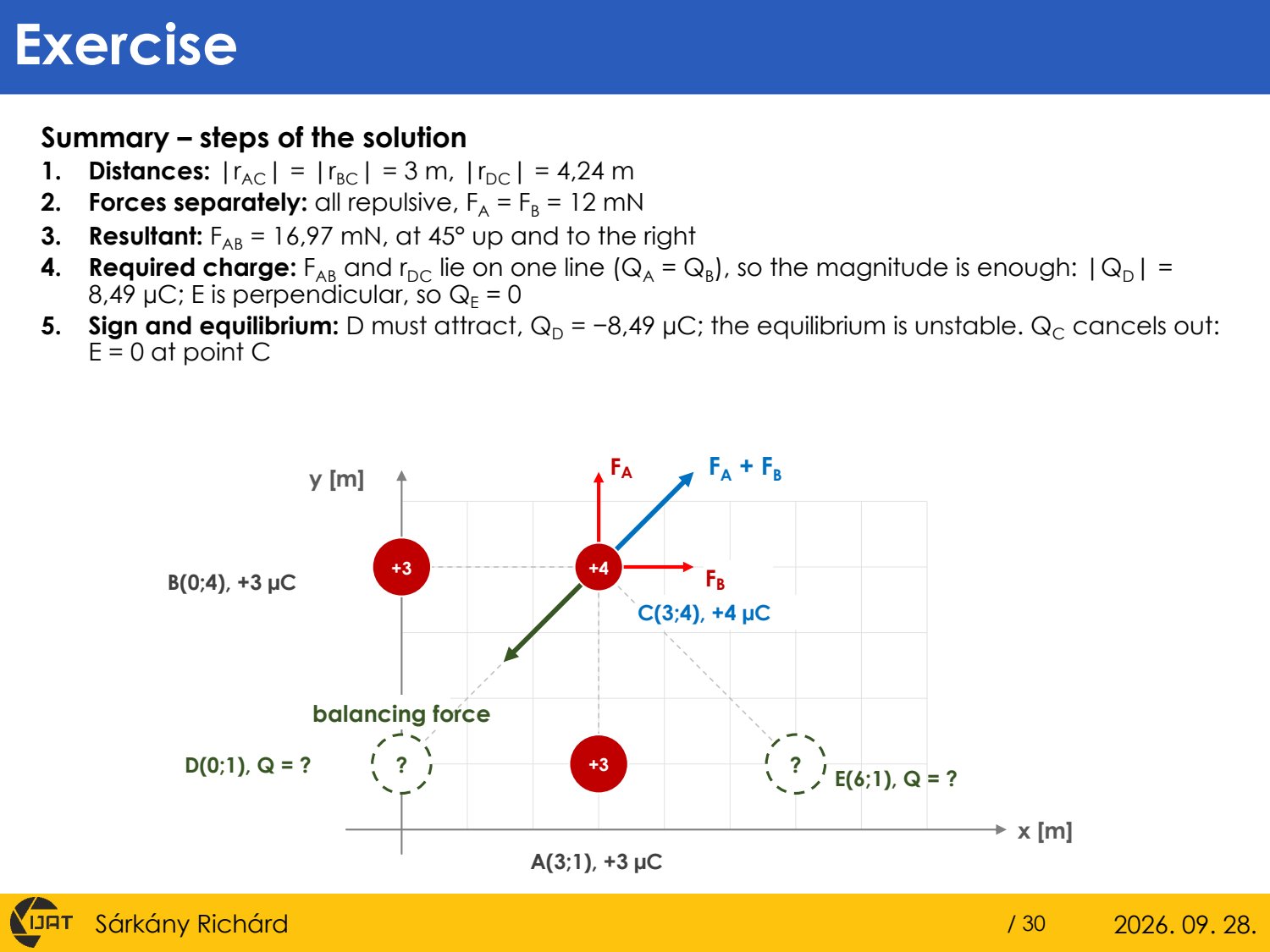
In a rectangular coordinate system, 'C' is at the origin. Point 'A' is below 'C', point 'B' is to the left of 'C', both at a distance of L = 8 m (A(0;−8), B(−8;0)). A charge of +10.99 nC is fixed at both 'A' and 'B', and a charge of +18.56 nC is at 'C'. Point 'D' is at (−8;−8), and point 'E' is at (8;−8). What charge must be placed at 'D' and at 'E' so that the charge at 'C' remains in equilibrium?
View solution
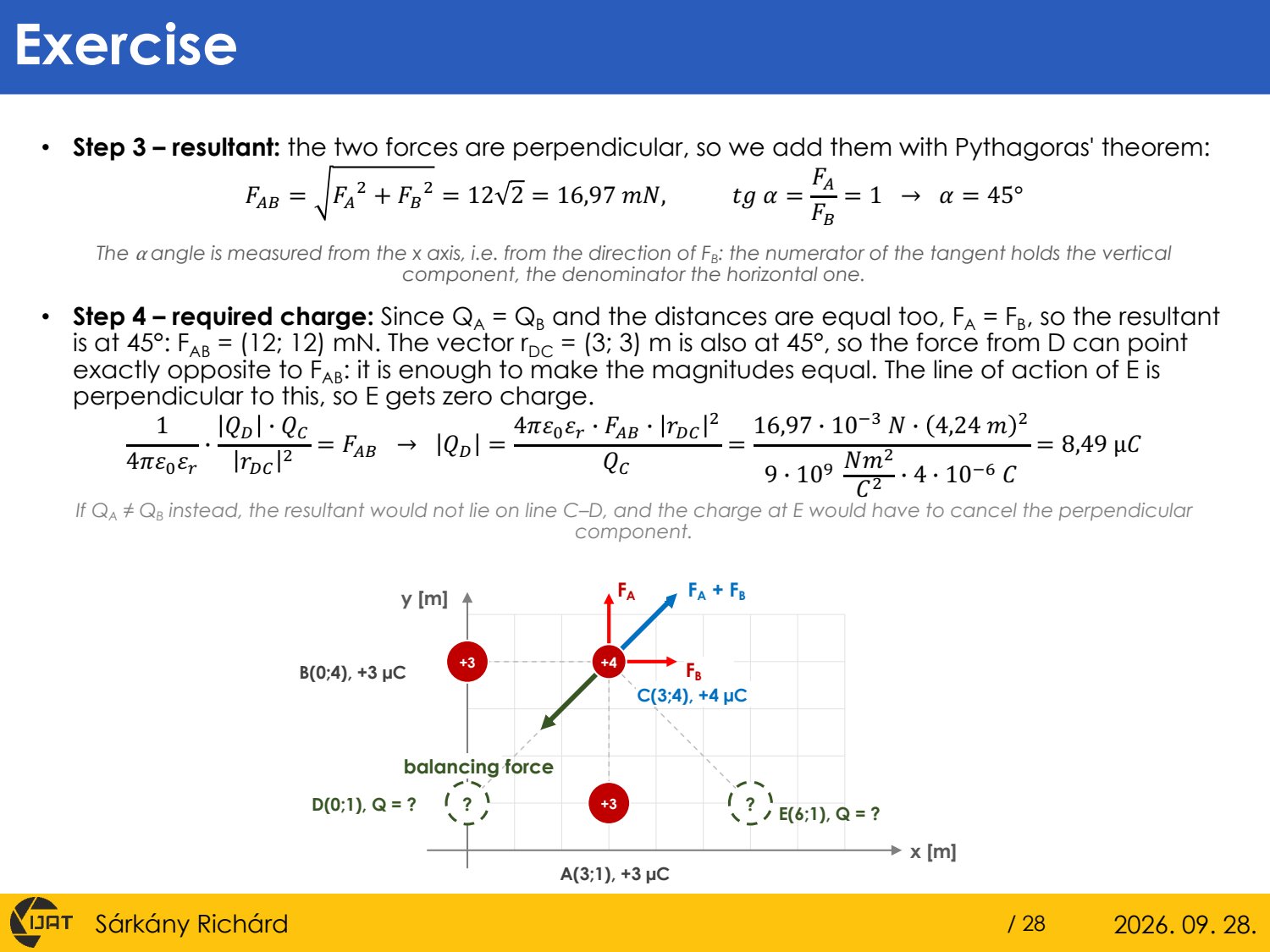
| Direction of the net force from the charges at A and B | along the diagonal, pointing opposite to D (i.e., to the northeast) |
| Required charge at D | −31.08 nC (opposite sign to Q_A and Q_B – attractive) |
| Required charge at E | 0 nC (E lies perpendicular to the direction of the resultant force) |
View relevant slide (solution method)